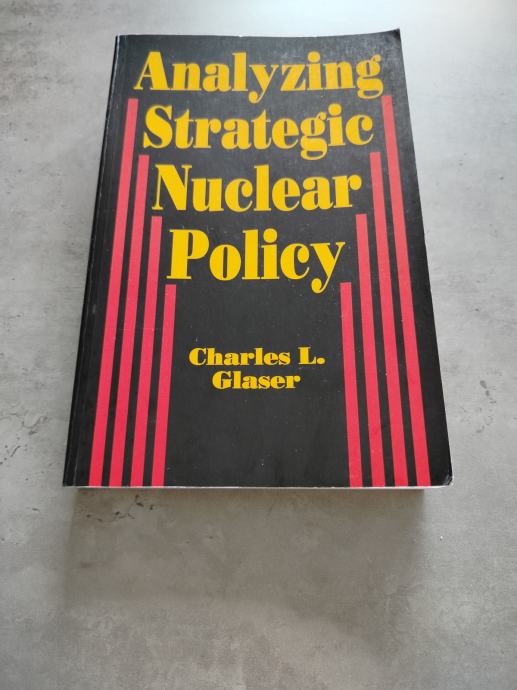


Charles L. Glaser - Analyzing Strategic Nuclear Policy
- Cena
- 10 €
+ zaščita kupca 0,99 €
+ dostava 0,00 €
Brez skrbi, poštnino častimo mi!
Izkoristi promocijsko obdobje.

Plačaj varno in enostavno z Google ali Apple pay.
Storitev BREZ SKRBI - Denar za izdelek nakažete na nevtralni račun bolha.com. Če prejeti izdelek ni enak naročenemu ali izdelek ni bil dostavljen, vam vrnemo denar. Pred naročanjem pozorno preberite Navodila in pogosta vprašanja.
Šifra oglasa: 14368276
Osnovne informacije
- Lokacija
- Osrednjeslovenska, Ljubljana Center, Trnovo
- Stanje
- rabljeno
Opis oglasa
Charles L. Glaser - Analyzing Strategic Nuclear Policy
Princeton University Press, 1990
378 str.
mehka vezava
stanje: dobro
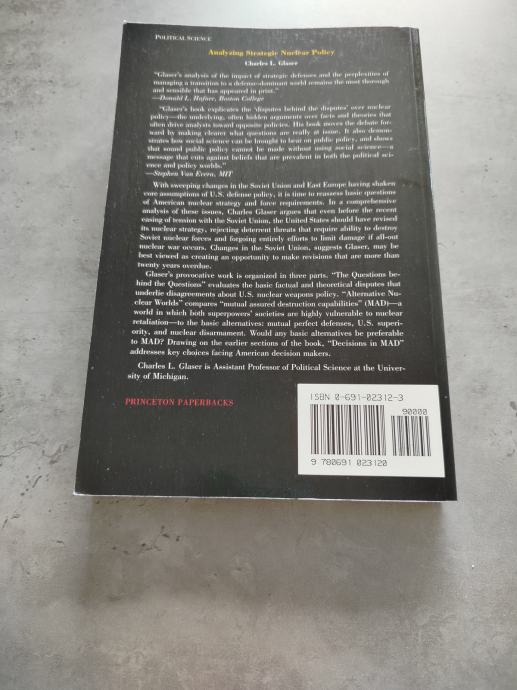
With sweeping changes in the Soviet Union and East Europe having shaken core assumptions of U.S. defense policy, it is time to reassess basic questions of American nuclear strategy and force requirements. In a comprehensive analysis of these issues, Charles Glaser argues that even before the recent easing of tension with the Soviet Union, the United States should have revised its nuclear strategy, rejecting deterrent threats that require the ability to destroy Soviet nuclear forces and forgoing entirely efforts to limit damage if all-out nuclear war occurs. Changes in the Soviet Union, suggests Glaser, may be best viewed as creating an opportunity to make revisions that are more than twenty years overdue. Glaser's provocative work is organized in three parts. "The Questions behind the Questions" evaluates the basic factual and theoretical disputes that underlie disagreements about U.S. nuclear weapons policy. "Alternative Nuclear Worlds" compares "mutual assured destruction capabilities" (MAD)--a world in which both superpowers' societies are highly vulnerable to nuclear retaliation--to the basic alternatives: mutual perfect defenses, U.S. superiority, and nuclear disarmament. Would any basic alternatives be preferable to MAD? Drawing on the earlier sections of the book, "Decisions in MAD" addresses key choices facing American decision makers.
(Princeton Legacy Library, 1188)
Contents
CHAPTER ONE. Introduction
PART I: The Questions behind the Questions
CHAPTER TWO. Disputes over the U.S. Military Requirements of Nuclear Deterrence
CHAPTER THREE. Disputes about the International Political Consequences of Competing and Cooperating with the Soviet Union
PART II. Alternative Nuclear Worlds
CHAPTER FOUR. Why Even Good Defenses May Be Bad
CHAPTER FIVE. Why U.S. Superiority Is Probably Inferior to MAD
CHAPTER SIX. Why Disarmament Is Probably More Dangerous than MAD
PART III Decisions in MAD
CHAPTER SEVEN. Does the United States Need Counterforce in MAD?
CHAPTER EIGHT. Does the United States Need ICBMs?
CHAPTER NINE. Should the United States Deploy Limited Ballistic Missile Defenses?
CHAPTER TEN. What Type of Arms Control in MAD?
CHAPTER ELEVEN. Conclusions
Index
Nonfiction, Politics, 0691023123
---------------------------------------
Osebni prevzem je možen v centru Ljubljane ali Trnovem. Pošiljanje po poti je mogoče po predhodnem nakazilu na TRR. Poštnino plača kupec.
Prosim za sms ali sporočilo prek Bolhe, hvala.
Princeton University Press, 1990
378 str.
mehka vezava
stanje: dobro
With sweeping changes in the Soviet Union and East Europe having shaken core assumptions of U.S. defense policy, it is time to reassess basic questions of American nuclear strategy and force requirements. In a comprehensive analysis of these issues, Charles Glaser argues that even before the recent easing of tension with the Soviet Union, the United States should have revised its nuclear strategy, rejecting deterrent threats that require the ability to destroy Soviet nuclear forces and forgoing entirely efforts to limit damage if all-out nuclear war occurs. Changes in the Soviet Union, suggests Glaser, may be best viewed as creating an opportunity to make revisions that are more than twenty years overdue. Glaser's provocative work is organized in three parts. "The Questions behind the Questions" evaluates the basic factual and theoretical disputes that underlie disagreements about U.S. nuclear weapons policy. "Alternative Nuclear Worlds" compares "mutual assured destruction capabilities" (MAD)--a world in which both superpowers' societies are highly vulnerable to nuclear retaliation--to the basic alternatives: mutual perfect defenses, U.S. superiority, and nuclear disarmament. Would any basic alternatives be preferable to MAD? Drawing on the earlier sections of the book, "Decisions in MAD" addresses key choices facing American decision makers.
(Princeton Legacy Library, 1188)
Contents
CHAPTER ONE. Introduction
PART I: The Questions behind the Questions
CHAPTER TWO. Disputes over the U.S. Military Requirements of Nuclear Deterrence
CHAPTER THREE. Disputes about the International Political Consequences of Competing and Cooperating with the Soviet Union
PART II. Alternative Nuclear Worlds
CHAPTER FOUR. Why Even Good Defenses May Be Bad
CHAPTER FIVE. Why U.S. Superiority Is Probably Inferior to MAD
CHAPTER SIX. Why Disarmament Is Probably More Dangerous than MAD
PART III Decisions in MAD
CHAPTER SEVEN. Does the United States Need Counterforce in MAD?
CHAPTER EIGHT. Does the United States Need ICBMs?
CHAPTER NINE. Should the United States Deploy Limited Ballistic Missile Defenses?
CHAPTER TEN. What Type of Arms Control in MAD?
CHAPTER ELEVEN. Conclusions
Index
Nonfiction, Politics, 0691023123
---------------------------------------
Osebni prevzem je možen v centru Ljubljane ali Trnovem. Pošiljanje po poti je mogoče po predhodnem nakazilu na TRR. Poštnino plača kupec.
Prosim za sms ali sporočilo prek Bolhe, hvala.
Zemljevid
Opomba: prikaže se približna lokacija vašega oglasa

Fletch
Vsi oglasi tega oglaševalca
Uporabnik je telefonsko številko preveril v državi Slovenija
Uporabnik ni trgovec in zanj ne veljajo določbe EU o varstvu potrošnikov.
- Naslov: 1000 Ljubljana, Osrednjeslovenska, Slovenija
- Oglas je objavljen
- 12.12.2025. ob 13:46
- Do poteka še
- Oglas je prikazan
- 739 -krat
Fletch
Vsi oglasi tega oglaševalca
Uporabnik je telefonsko številko preveril v državi Slovenija
Uporabnik ni trgovec in zanj ne veljajo določbe EU o varstvu potrošnikov.
- Naslov: 1000 Ljubljana, Osrednjeslovenska, Slovenija