

Albert Einstein - Worte in Zeit und Raum / nemško - žepna
- Cena
- 5,99 €
+ zaščita kupca 0,99 €
+ dostava 0,00 €
Brez skrbi, poštnino častimo mi!
Izkoristi promocijsko obdobje.

Plačaj varno in enostavno z Google ali Apple pay.
Storitev BREZ SKRBI - Denar za izdelek nakažete na nevtralni račun bolha.com. Če prejeti izdelek ni enak naročenemu ali izdelek ni bil dostavljen, vam vrnemo denar. Pred naročanjem pozorno preberite Navodila in pogosta vprašanja.
Šifra oglasa: 11106594
Osnovne informacije
- Lokacija
- Posavska, Brežice, Jesenice na Dolenjskem
- Stanje
- rabljeno
Opis oglasa
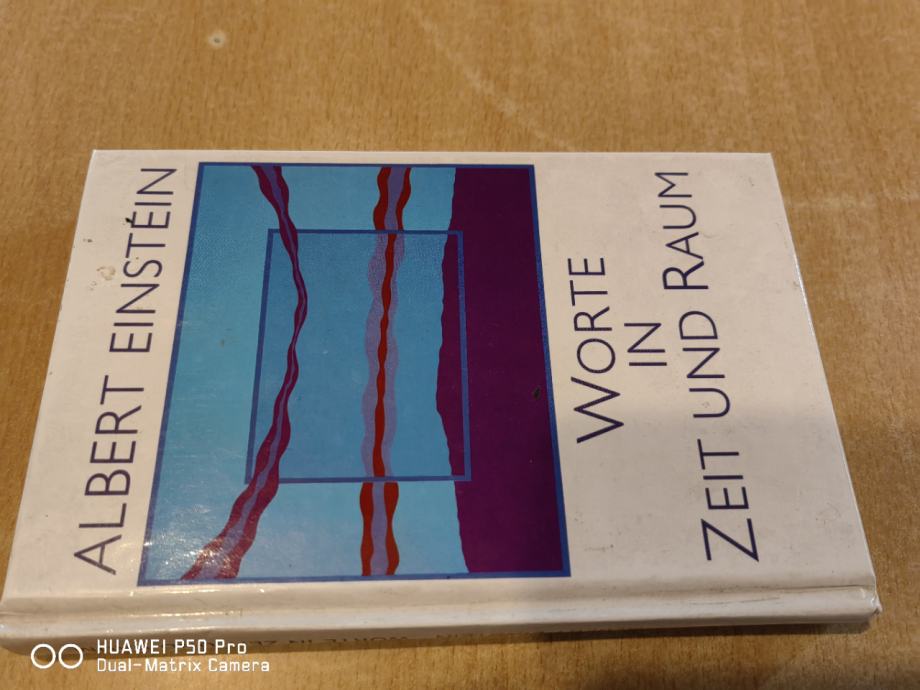
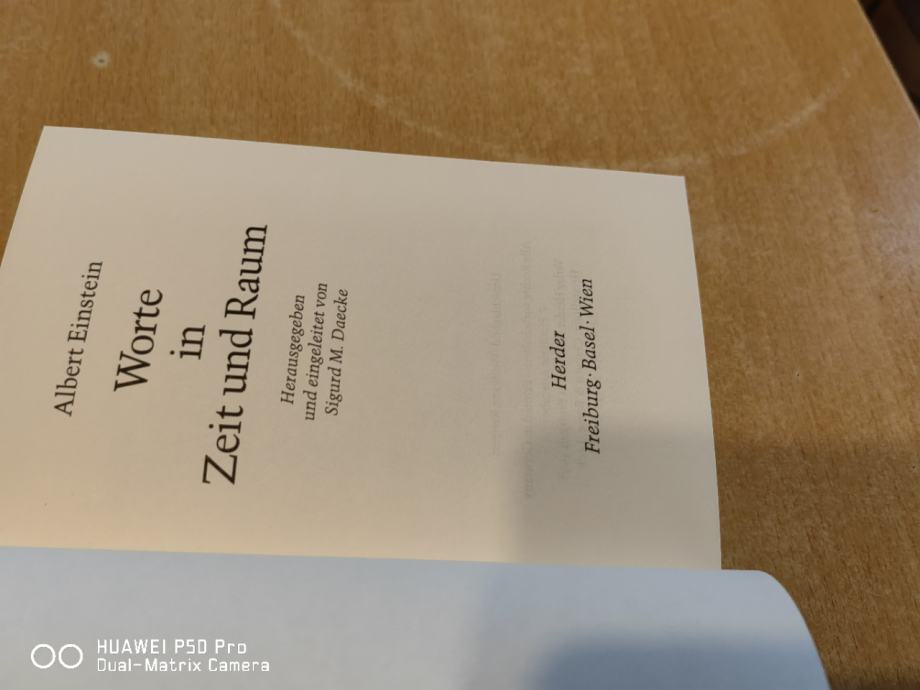
Besede v času in prostoru, trda vezava
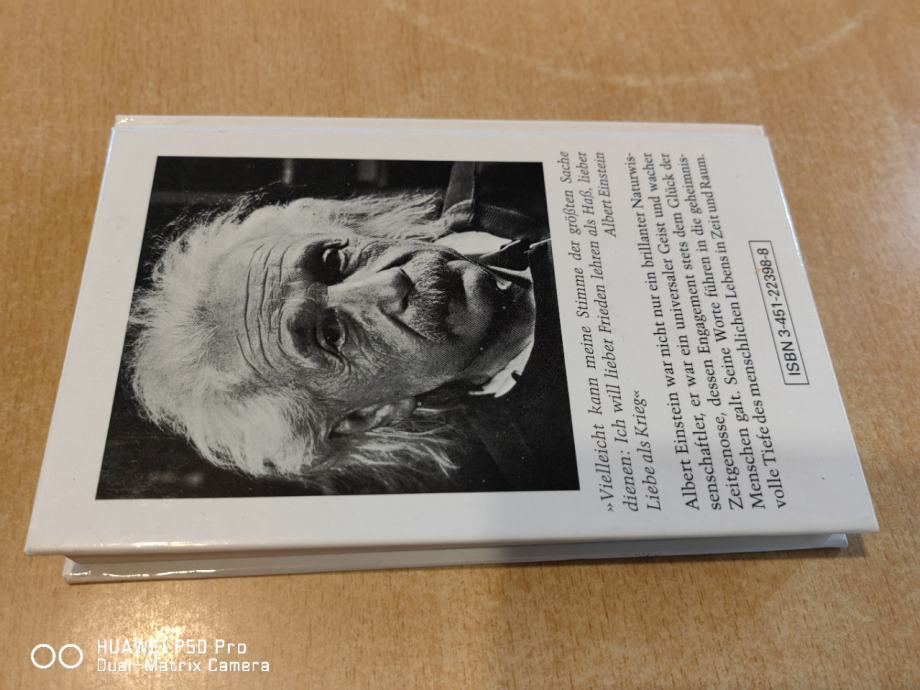
avtorja Albert Einstein
Worte in Zeit und Raum - Albert Einstein
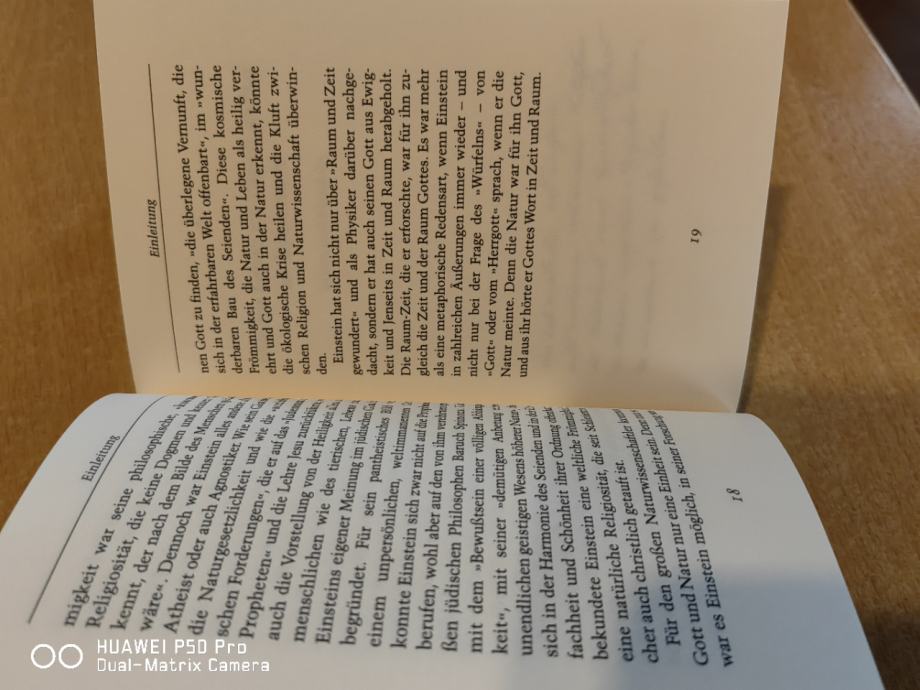
LEPO OHRANJENO ,TRDE PLATNICE ,ŽEPNA
POGLEJTE ŠE OSTALE MOJE KNJIGE,
ČE VZAMETE VSAJ TRI KNJIGE IN PLAČATE NA TRR ALI Z GOTOVINO JE POŠTNINA B R E Z P L A Č N A
(razen kadar je posebno označeno da poštnino plača kupec )
LOK - V2 / MALI FORMAT KNJIGE,USPEŠNICE ,KLASIKI,NAJBOLJ BRANE KNJIGE
SLIKE SO AVTORSKO ZAŠČITENE.
PRI VAŠEM SPOROČILU PROSIM NAPIŠITE ŠA VAŠ KONTAKT(TELEFON,MAIL,..)
Leta 1879 se je v Ulmu v Nemčiji rodil Albert Einstein. Doktoriral je. na Univerzi v Zürichu do leta 1909. Njegov članek iz leta 1905, v katerem je razložil fotoelektrični učinek, osnovo elektronike, mu je leta 1921 prinesel Nobelovo nagrado. Njegov prvi članek o posebni teoriji relativnosti, prav tako objavljen leta 1905, je spremenil svet. Po vzponu nacistične stranke je Einstein sprejel Princeton za svoj stalni dom in leta 1940 postal državljan ZDA. Einstein, ki je bil med prvo svetovno vojno pacifist, je ostal odločen zagovornik družbene pravičnosti in odgovornosti. Predsedoval je Odboru za nujne primere atomskih znanstvenikov, ki je organiziral opozarjanje javnosti na nevarnosti atomskega bojevanja.
Na simpoziju je svetoval: »V svojem boju za etično dobro morajo biti učitelji vere dovolj ugledni, da se odpovejo nauku o osebnem Bogu, to je, da se odrečejo tistemu viru strahu in upanja, ki je v preteklosti postavljal takšne veliko moč v rokah duhovnikov. Pri svojem delu se bodo morali okoristiti s tistimi silami, ki so sposobne gojiti Dobro, Resnično in Lepo v samem človeštvu. To je seveda težje, a neprimerljivo vrednejša naloga ...« (»Science, Philosophy and Religion, A Symposium«, ki ga je objavila Konferenca o znanosti, filozofiji in religiji v njihovem odnosu do demokratičnega načina življenja, Inc., New York, 1941). V pismu filozofu Ericu Gutkindu z dne 3. januarja 1954 je Einstein izjavil: »Beseda bog zame ni nič drugega kot izraz in produkt človeških slabosti, Sveto pismo zbirka častnih, a še vedno primitivnih legend, ki so kljub temu precej otročje. Nobena interpretacija, ne glede na to, kako subtilna je (zame), ne more tega spremeniti,« (The Guardian, »Childish superstition: Einstein's letter makes view of religion relatively clear«, avtor James Randerson, 13. maj 2008). D. 1955.
Medtem ko je bil najbolj znan po svoji formuli za ekvivalenco mase in energije E = mc2 (ki so jo poimenovali "najbolj znana enačba na svetu"), je leta 1921 prejel Nobelovo nagrado za fiziko "za svoje zasluge pri teoretični fiziki in zlasti za odkritje zakon fotoelektričnega učinka". Slednji je bil ključen pri vzpostavitvi kvantne teorije.
In 1879, Albert Einstein was born in Ulm, Germany. He completed his Ph.D. at the University of Zurich by 1909. His 1905 paper explaining the photoelectric effect, the basis of electronics, earned him the Nobel Prize in 1921. His first paper on Special Relativity Theory, also published in 1905, changed the world. After the rise of the Nazi party, Einstein made Princeton his permanent home, becoming a U.S. citizen in 1940. Einstein, a pacifist during World War I, stayed a firm proponent of social justice and responsibility. He chaired the Emergency Committee of Atomic Scientists, which organized to alert the public to the dangers of atomic warfare.
At a symposium, he advised: "In their struggle for the ethical good, teachers of religion must have the stature to give up the doctrine of a personal God, that is, give up that source of fear and hope which in the past placed such vast power in the hands of priests. In their labors they will have to avail themselves of those forces which are capable of cultivating the Good, the True, and the Beautiful in humanity itself. This is, to be sure a more difficult but an incomparably more worthy task . . . " ("Science, Philosophy and Religion, A Symposium," published by the Conference on Science, Philosophy and Religion in their Relation to the Democratic Way of Life, Inc., New York, 1941). In a letter to philosopher Eric Gutkind, dated Jan. 3, 1954, Einstein stated: "The word god is for me nothing more than the expression and product of human weaknesses, the Bible a collection of honorable, but still primitive legends which are nevertheless pretty childish. No interpretation no matter how subtle can (for me) change this," (The Guardian, "Childish superstition: Einstein's letter makes view of religion relatively clear," by James Randerson, May 13, 2008). D. 1955.
While best known for his mass–energy equivalence formula E = mc2 (which has been dubbed "the world's most famous equation"), he received the 1921 Nobel Prize in Physics "for his services to theoretical physics, and especially for his discovery of the law of the photoelectric effect". The latter was pivotal in establishing quantum theory.
Einstein thought that Newtonion mechanics was no longer enough to reconcile the laws of classical mechanics with the laws of the electromagnetic field. This led to the development of his special theory of relativity. He realized, however, that the principle of relativity could also be extended to gravitational fields, and with his subsequent theory of gravitation in 1916, he published a paper on the general theory of relativity. He continued to deal with problems of statistical mechanics and quantum theory, which led to his explanations of particle theory and the motion of molecules. He also investigated the thermal properties of light which laid the foundation of the photon theory of light.
He was visiting the United States when Adolf Hitler came to power in 1933 and did not go back to Germany. On the eve of World War II, he endorsed a letter to President Franklin D. Roosevelt alerting him to the potential development of "extremely powerful bombs of a new type" and recommending that the U.S. begin similar research. This eventually led to what would become the Manhattan Project. Einstein supported defending the Allied forces, but largely denounced the idea of using the newly discovered nuclear fission as a weapon. Later, with Bertrand Russell, Einstein signed the Russell–Einstein Manifesto, which highlighted the danger of nuclear weapons. Einstein was affiliated with the Institute for Advanced Study in Princeton, New Jersey, until his death in 1955.
His great intellectual achievements and originality have made the word "Einstein" synonymous with genius.
More: http://en.wikipedia.org/wiki/Albert_E...
http://www.nobelprize.org/nobel_prize...
avtorja Albert Einstein
Worte in Zeit und Raum - Albert Einstein
LEPO OHRANJENO ,TRDE PLATNICE ,ŽEPNA
POGLEJTE ŠE OSTALE MOJE KNJIGE,
ČE VZAMETE VSAJ TRI KNJIGE IN PLAČATE NA TRR ALI Z GOTOVINO JE POŠTNINA B R E Z P L A Č N A
(razen kadar je posebno označeno da poštnino plača kupec )
LOK - V2 / MALI FORMAT KNJIGE,USPEŠNICE ,KLASIKI,NAJBOLJ BRANE KNJIGE
SLIKE SO AVTORSKO ZAŠČITENE.
PRI VAŠEM SPOROČILU PROSIM NAPIŠITE ŠA VAŠ KONTAKT(TELEFON,MAIL,..)
Leta 1879 se je v Ulmu v Nemčiji rodil Albert Einstein. Doktoriral je. na Univerzi v Zürichu do leta 1909. Njegov članek iz leta 1905, v katerem je razložil fotoelektrični učinek, osnovo elektronike, mu je leta 1921 prinesel Nobelovo nagrado. Njegov prvi članek o posebni teoriji relativnosti, prav tako objavljen leta 1905, je spremenil svet. Po vzponu nacistične stranke je Einstein sprejel Princeton za svoj stalni dom in leta 1940 postal državljan ZDA. Einstein, ki je bil med prvo svetovno vojno pacifist, je ostal odločen zagovornik družbene pravičnosti in odgovornosti. Predsedoval je Odboru za nujne primere atomskih znanstvenikov, ki je organiziral opozarjanje javnosti na nevarnosti atomskega bojevanja.
Na simpoziju je svetoval: »V svojem boju za etično dobro morajo biti učitelji vere dovolj ugledni, da se odpovejo nauku o osebnem Bogu, to je, da se odrečejo tistemu viru strahu in upanja, ki je v preteklosti postavljal takšne veliko moč v rokah duhovnikov. Pri svojem delu se bodo morali okoristiti s tistimi silami, ki so sposobne gojiti Dobro, Resnično in Lepo v samem človeštvu. To je seveda težje, a neprimerljivo vrednejša naloga ...« (»Science, Philosophy and Religion, A Symposium«, ki ga je objavila Konferenca o znanosti, filozofiji in religiji v njihovem odnosu do demokratičnega načina življenja, Inc., New York, 1941). V pismu filozofu Ericu Gutkindu z dne 3. januarja 1954 je Einstein izjavil: »Beseda bog zame ni nič drugega kot izraz in produkt človeških slabosti, Sveto pismo zbirka častnih, a še vedno primitivnih legend, ki so kljub temu precej otročje. Nobena interpretacija, ne glede na to, kako subtilna je (zame), ne more tega spremeniti,« (The Guardian, »Childish superstition: Einstein's letter makes view of religion relatively clear«, avtor James Randerson, 13. maj 2008). D. 1955.
Medtem ko je bil najbolj znan po svoji formuli za ekvivalenco mase in energije E = mc2 (ki so jo poimenovali "najbolj znana enačba na svetu"), je leta 1921 prejel Nobelovo nagrado za fiziko "za svoje zasluge pri teoretični fiziki in zlasti za odkritje zakon fotoelektričnega učinka". Slednji je bil ključen pri vzpostavitvi kvantne teorije.
In 1879, Albert Einstein was born in Ulm, Germany. He completed his Ph.D. at the University of Zurich by 1909. His 1905 paper explaining the photoelectric effect, the basis of electronics, earned him the Nobel Prize in 1921. His first paper on Special Relativity Theory, also published in 1905, changed the world. After the rise of the Nazi party, Einstein made Princeton his permanent home, becoming a U.S. citizen in 1940. Einstein, a pacifist during World War I, stayed a firm proponent of social justice and responsibility. He chaired the Emergency Committee of Atomic Scientists, which organized to alert the public to the dangers of atomic warfare.
At a symposium, he advised: "In their struggle for the ethical good, teachers of religion must have the stature to give up the doctrine of a personal God, that is, give up that source of fear and hope which in the past placed such vast power in the hands of priests. In their labors they will have to avail themselves of those forces which are capable of cultivating the Good, the True, and the Beautiful in humanity itself. This is, to be sure a more difficult but an incomparably more worthy task . . . " ("Science, Philosophy and Religion, A Symposium," published by the Conference on Science, Philosophy and Religion in their Relation to the Democratic Way of Life, Inc., New York, 1941). In a letter to philosopher Eric Gutkind, dated Jan. 3, 1954, Einstein stated: "The word god is for me nothing more than the expression and product of human weaknesses, the Bible a collection of honorable, but still primitive legends which are nevertheless pretty childish. No interpretation no matter how subtle can (for me) change this," (The Guardian, "Childish superstition: Einstein's letter makes view of religion relatively clear," by James Randerson, May 13, 2008). D. 1955.
While best known for his mass–energy equivalence formula E = mc2 (which has been dubbed "the world's most famous equation"), he received the 1921 Nobel Prize in Physics "for his services to theoretical physics, and especially for his discovery of the law of the photoelectric effect". The latter was pivotal in establishing quantum theory.
Einstein thought that Newtonion mechanics was no longer enough to reconcile the laws of classical mechanics with the laws of the electromagnetic field. This led to the development of his special theory of relativity. He realized, however, that the principle of relativity could also be extended to gravitational fields, and with his subsequent theory of gravitation in 1916, he published a paper on the general theory of relativity. He continued to deal with problems of statistical mechanics and quantum theory, which led to his explanations of particle theory and the motion of molecules. He also investigated the thermal properties of light which laid the foundation of the photon theory of light.
He was visiting the United States when Adolf Hitler came to power in 1933 and did not go back to Germany. On the eve of World War II, he endorsed a letter to President Franklin D. Roosevelt alerting him to the potential development of "extremely powerful bombs of a new type" and recommending that the U.S. begin similar research. This eventually led to what would become the Manhattan Project. Einstein supported defending the Allied forces, but largely denounced the idea of using the newly discovered nuclear fission as a weapon. Later, with Bertrand Russell, Einstein signed the Russell–Einstein Manifesto, which highlighted the danger of nuclear weapons. Einstein was affiliated with the Institute for Advanced Study in Princeton, New Jersey, until his death in 1955.
His great intellectual achievements and originality have made the word "Einstein" synonymous with genius.
More: http://en.wikipedia.org/wiki/Albert_E...
http://www.nobelprize.org/nobel_prize...
Zemljevid
Opomba: prikaže se približna lokacija vašega oglasa
mitjah13
Uporabnik je telefonsko številko preveril v državi Slovenija
Uporabnik ni trgovec in zanj ne veljajo določbe EU o varstvu potrošnikov.
- Naslov: 8261 Jesenice na dolenjskem, Posavska, Slovenija
- Oglas je objavljen
- 20.11.2025. ob 14:03
- Do poteka še
- Oglas je prikazan
- 599 -krat
mitjah13
Uporabnik je telefonsko številko preveril v državi Slovenija
Uporabnik ni trgovec in zanj ne veljajo določbe EU o varstvu potrošnikov.
- Naslov: 8261 Jesenice na dolenjskem, Posavska, Slovenija