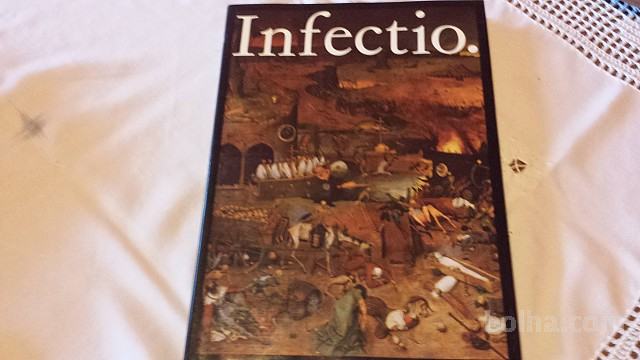


Infectio. Infectious Diseases,.. - zgodovina medicine / angleško
- Cena
- 9,99 €
+ zaščita kupca 0,99 €
+ dostava 0,00 €
Brez skrbi, poštnino častimo mi!
Izkoristi promocijsko obdobje.

Plačaj varno in enostavno z Google ali Apple pay.
Storitev BREZ SKRBI - Denar za izdelek nakažete na nevtralni račun bolha.com. Če prejeti izdelek ni enak naročenemu ali izdelek ni bil dostavljen, vam vrnemo denar. Pred naročanjem pozorno preberite Navodila in pogosta vprašanja.
Šifra oglasa: 298279
Osnovne informacije
- Lokacija
- Posavska, Brežice, Jesenice na Dolenjskem
- Stanje
- rabljeno
Opis oglasa
KNJIGA JE V ANGLEŠKEM JEZIKU
INFECTIO,INFECTIOUS DISEASES IN THE HISTORY OF MEDICINE,
KNJIGA JE KOT NOVA,VELIKI FORMAT,231 STRANI,V ANGLEŠKEM JEZIKU,LEPO DARILO,POGLEJTE ŠE OSTALE MOJE KNJIGE,ČE VZAMETE VSAJ TRI IN PLAČATE NA TRR,JAZ PLAČAM POŠTNINO
Infectio: Infectious Diseases in the History of Medicine
Published by Editions Roche
Bibliographic Details
Title: Infectio. Infectious Diseases in the History...
Publisher: Editiones (Roche)., Basle
Publication Date: 1987
Binding: Decorated hard cover.
Dust Jacket Condition: Dust Jacket Included
Edition: First edition.
LOK-V4
Infectio: Infectious Diseases in the History of Medicine Hardcover – 1987
by W Schreiber (Author)
Product details
Hardcover
Publisher: Editions Roche (1987)
Language: English
ASIN: B000B9F87A
Parcel Dimensions: 24.9 x 19.8 x 4.1 cm
Shipping Weight: 159 g
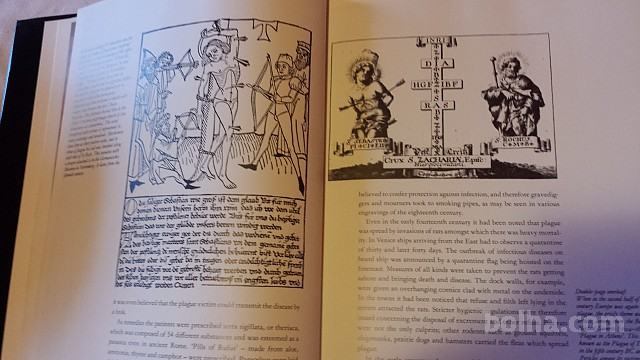
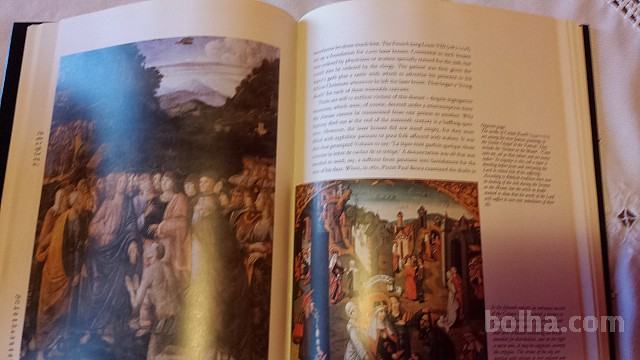
'Infection' - the word denotes first and foremost a pathogenic mechanism. A virus, a unicellular or a multicellular parasite enters the human body. There it multiplies and, either directly through its own metabolic products or indirectly through the defence reactions of the host organism, provokes phenomena which, because of their conformity to a pattern, can be arranged as typical disease entities. At the same time infection is also a symbol of the constant threat this pathogenic mechanism poses for human existence - a threat which, early in human history, was recognized as being of extraneous origin and therefore perhaps felt more keenly than other diseases to be a challenge. This book tells of the response to that challenge, at first in a narrative and descriptive form, then as transfigured by artists, and lastly at a scientific and analytical level. Anyone bearing these three levels in mind while reading the book will, by the time he finishes, come to the conclusion that, since the great plague of 1348, considerable progress has been made in the description of diseases and their effects - excellent though the vivid illustrations left us by earlier centures may be. Through the heroic achievements of a Louis Pasteur, Robert Koch, Paul Ehrlich and many of their contemporaries and succesors as scientists and investigators of infectious diseases, we have gained a new level of understanding. Table of contents include: Plague, Cholera, Dysentery, Tularemia, Syphilis, Gonorrhea, Leprosy, Epidemic meningitis, Smallpox, Lymphogranuloma venereum, Granuloma inguinale, Thphoid fever, Typhus, Toxoplasmosis, Brucellosis, Schistosomiasis, Leishmaniasis, Tetanus, Diphtheria, Tuberculosis, Amebiasis, Herpes, Chancroid, Lambliasis (giardiasis), Chagas' disease, Scarlet fever, Malaria, Trypanosomiases, AIDS.
„Okužba“ - beseda označuje predvsem patogeni mehanizem. Virus, enocelični ali večcelični parazit vstopi v človeško telo. Tam se razmnoži in bodisi neposredno s svojimi presnovnimi produkti bodisi posredno z obrambnimi reakcijami gostiteljskega organizma sproži pojave, ki jih je mogoče zaradi svoje skladnosti z vzorcem urediti kot tipične bolezni. Hkrati je okužba tudi simbol nenehne nevarnosti, ki jo ta patogeni mehanizem predstavlja za človeški obstoj - grožnja, ki je bila že v zgodnji zgodovini človeštva prepoznana kot tujega izvora in je zato morda bolj kot druge bolezni čutila izziv . Ta knjiga govori o odzivu na ta izziv, najprej v pripovedni in opisni obliki, nato v obliki preoblikovanja umetnikov in nazadnje na znanstveni in analitični ravni. Kdor ima med branjem knjige te tri ravni v mislih, bo do konca zaključil, da je bil od velike kuge leta 1348 dosežen precejšen napredek pri opisovanju bolezni in njihovih učinkov - odličen, čeprav živahen ilustracije, ki so nam jih pustili prejšnji stoletji. Z junaškimi dosežki Louisa Pasteurja, Roberta Kocha, Paula Ehrlicha in mnogih njihovih sodobnikov in naslednikov kot znanstvenikov in preiskovalcev nalezljivih bolezni smo dosegli novo raven razumevanja. Kazalo vsebuje: kuga, kolera, dizenterija, tularemija, sifilis, gonoreja, gobavost, epidemični meningitis, črne koze, limfogranuloma venereum, granulom inguinale, trbušna vročica, tifus, toksoplazmoza, bruceloza, šistosistemijska bolezen, leishmaniberka dihama , Herpes, Chancroid, Lambliasis (giardiasis), Chagasova bolezen, škrlatinka, malarija, tripanosomiaze, aids.
INFECTIO,INFECTIOUS DISEASES IN THE HISTORY OF MEDICINE,
KNJIGA JE KOT NOVA,VELIKI FORMAT,231 STRANI,V ANGLEŠKEM JEZIKU,LEPO DARILO,POGLEJTE ŠE OSTALE MOJE KNJIGE,ČE VZAMETE VSAJ TRI IN PLAČATE NA TRR,JAZ PLAČAM POŠTNINO
Infectio: Infectious Diseases in the History of Medicine
Published by Editions Roche
Bibliographic Details
Title: Infectio. Infectious Diseases in the History...
Publisher: Editiones (Roche)., Basle
Publication Date: 1987
Binding: Decorated hard cover.
Dust Jacket Condition: Dust Jacket Included
Edition: First edition.
LOK-V4
Infectio: Infectious Diseases in the History of Medicine Hardcover – 1987
by W Schreiber (Author)
Product details
Hardcover
Publisher: Editions Roche (1987)
Language: English
ASIN: B000B9F87A
Parcel Dimensions: 24.9 x 19.8 x 4.1 cm
Shipping Weight: 159 g
'Infection' - the word denotes first and foremost a pathogenic mechanism. A virus, a unicellular or a multicellular parasite enters the human body. There it multiplies and, either directly through its own metabolic products or indirectly through the defence reactions of the host organism, provokes phenomena which, because of their conformity to a pattern, can be arranged as typical disease entities. At the same time infection is also a symbol of the constant threat this pathogenic mechanism poses for human existence - a threat which, early in human history, was recognized as being of extraneous origin and therefore perhaps felt more keenly than other diseases to be a challenge. This book tells of the response to that challenge, at first in a narrative and descriptive form, then as transfigured by artists, and lastly at a scientific and analytical level. Anyone bearing these three levels in mind while reading the book will, by the time he finishes, come to the conclusion that, since the great plague of 1348, considerable progress has been made in the description of diseases and their effects - excellent though the vivid illustrations left us by earlier centures may be. Through the heroic achievements of a Louis Pasteur, Robert Koch, Paul Ehrlich and many of their contemporaries and succesors as scientists and investigators of infectious diseases, we have gained a new level of understanding. Table of contents include: Plague, Cholera, Dysentery, Tularemia, Syphilis, Gonorrhea, Leprosy, Epidemic meningitis, Smallpox, Lymphogranuloma venereum, Granuloma inguinale, Thphoid fever, Typhus, Toxoplasmosis, Brucellosis, Schistosomiasis, Leishmaniasis, Tetanus, Diphtheria, Tuberculosis, Amebiasis, Herpes, Chancroid, Lambliasis (giardiasis), Chagas' disease, Scarlet fever, Malaria, Trypanosomiases, AIDS.
„Okužba“ - beseda označuje predvsem patogeni mehanizem. Virus, enocelični ali večcelični parazit vstopi v človeško telo. Tam se razmnoži in bodisi neposredno s svojimi presnovnimi produkti bodisi posredno z obrambnimi reakcijami gostiteljskega organizma sproži pojave, ki jih je mogoče zaradi svoje skladnosti z vzorcem urediti kot tipične bolezni. Hkrati je okužba tudi simbol nenehne nevarnosti, ki jo ta patogeni mehanizem predstavlja za človeški obstoj - grožnja, ki je bila že v zgodnji zgodovini človeštva prepoznana kot tujega izvora in je zato morda bolj kot druge bolezni čutila izziv . Ta knjiga govori o odzivu na ta izziv, najprej v pripovedni in opisni obliki, nato v obliki preoblikovanja umetnikov in nazadnje na znanstveni in analitični ravni. Kdor ima med branjem knjige te tri ravni v mislih, bo do konca zaključil, da je bil od velike kuge leta 1348 dosežen precejšen napredek pri opisovanju bolezni in njihovih učinkov - odličen, čeprav živahen ilustracije, ki so nam jih pustili prejšnji stoletji. Z junaškimi dosežki Louisa Pasteurja, Roberta Kocha, Paula Ehrlicha in mnogih njihovih sodobnikov in naslednikov kot znanstvenikov in preiskovalcev nalezljivih bolezni smo dosegli novo raven razumevanja. Kazalo vsebuje: kuga, kolera, dizenterija, tularemija, sifilis, gonoreja, gobavost, epidemični meningitis, črne koze, limfogranuloma venereum, granulom inguinale, trbušna vročica, tifus, toksoplazmoza, bruceloza, šistosistemijska bolezen, leishmaniberka dihama , Herpes, Chancroid, Lambliasis (giardiasis), Chagasova bolezen, škrlatinka, malarija, tripanosomiaze, aids.
Zemljevid
Opomba: prikaže se približna lokacija vašega oglasa
mitjah13
Uporabnik je telefonsko številko preveril v državi Slovenija
Uporabnik ni trgovec in zanj ne veljajo določbe EU o varstvu potrošnikov.
- Naslov: 8261 Jesenice na dolenjskem, Posavska, Slovenija
- Oglas je objavljen
- 27.11.2025. ob 02:08
- Do poteka še
- Oglas je prikazan
- 623 -krat
mitjah13
Uporabnik je telefonsko številko preveril v državi Slovenija
Uporabnik ni trgovec in zanj ne veljajo določbe EU o varstvu potrošnikov.
- Naslov: 8261 Jesenice na dolenjskem, Posavska, Slovenija